'/>
<circle cx='32' cy='26' r='10' fill='rgba(255,255,255,0.85)'/>
<path d='M14 56c0-10 8-16 18-16s18 6 18 16' fill='rgba(255,255,255,0.85)'/>
</svg>) The Stack Stories Editorial
The Stack Stories Editorial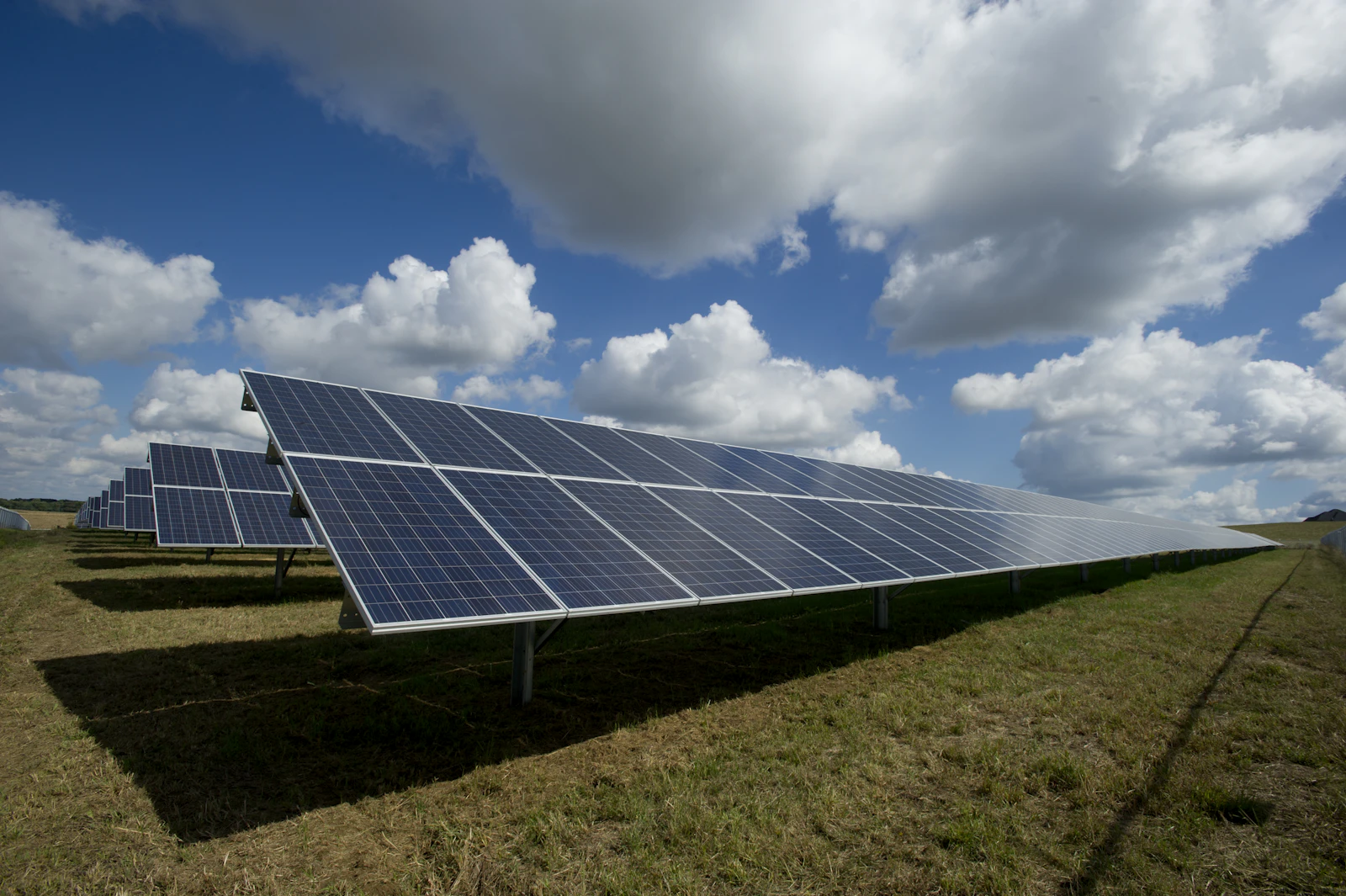
The clean-energy provisions of the Inflation Reduction Act, signed in August 2022, were billed as the largest climate investment in US history. The headline number was three-hundred-and-seventy billion dollars over a decade. The structure was unusual for federal climate policy: most of the spending takes the form of uncapped tax credits, which means the actual cost is whatever the market demands, not a budgeted ceiling. Three years in, the data is finally good enough to ask whether the bet is working.
This audit draws on three primary sources: the IRS published statistics on clean-energy tax credits, the Department of Energy Loan Programs Office reports, and the Energy Information Administration's electric power monthly. Where we cite specific figures, the source is one of those three. Final numbers for 2025 are still being trued up by the IRS; figures here use the most recent published or preliminary data.
What the IRA actually does
The Act bundles several distinct programs. The largest by dollar value are:
- The clean-electricity production and investment tax credits (Sections 45 and 48 in the tax code), which subsidize the construction and operation of zero-carbon generation.
- The advanced manufacturing production credit (Section 45X), which subsidizes domestic production of clean-energy components — solar cells, wind blades, batteries, critical minerals.
- The clean-vehicle tax credit (Section 30D), which subsidizes consumer purchases of qualifying EVs.
- The Loan Programs Office's expanded authority, which provides direct project finance for projects too large or too novel for private capital alone.
There are several smaller programs — methane fees, hydrogen credits, residential efficiency credits — that matter but are not central to the audit.
Generation: ahead of schedule
The clearest success story is in the generation tax credits. EIA's electric power monthly shows utility-scale solar and battery storage additions running at roughly twice the rate of the pre-IRA baseline through 2024 and 2025. The pipeline of permitted projects has continued to expand. By the end of 2025, the United States added more new clean-electricity capacity in a single calendar year than in any previous year on record.
The economics behind this are straightforward. The production tax credit is a per-megawatt-hour subsidy that materially shifts the economics of large-scale solar and onshore wind. The investment tax credit, particularly the bonus components for siting in former coal communities or for using domestic content, has further pushed projects toward locations and supply chains that align with the policy's political goals.
Manufacturing: real and uneven
The advanced manufacturing credit has worked, with caveats. Public DOE tracking and corporate announcements show tens of billions of dollars of announced US-based clean-energy manufacturing investments since 2022 — battery plants, solar module factories, electrolyzer facilities. Many of these are now operating; many others are in construction; a meaningful share have been delayed or scaled back as supply-demand dynamics shifted.
The unevenness has been the story. Solar module manufacturing has grown but US-made modules remain a minority of installations. Battery manufacturing has scaled fastest and farthest. Electrolyzer manufacturing has been slower because the demand side — green hydrogen — has been slower than its forecasts.
EVs: messier than the headline
The consumer EV credit story is the most complicated. EIA and the major manufacturers' public sales data show that EV adoption continued to grow through 2024 and 2025, but the rate of growth has been below the most aggressive forecasts. The reasons are mixed: charging infrastructure took longer to scale than projected, sticker prices remained higher than the equivalent ICE vehicle for many segments, and the credit's restrictions on critical mineral sourcing made some popular models temporarily ineligible.
The net effect is that the EV transition is happening but it is slower than the policy assumed. The credit is doing useful work; it is not doing miraculous work.
Loan Programs Office: large bets, mixed outcomes
The DOE Loan Programs Office's expanded authority has funded a growing pipeline of project loans — battery factories, geothermal projects, nuclear refurbishments, advanced reactors. The LPO's own reporting and audits show a portfolio that is roughly performing on track, with the inevitable individual project failures that come with venture-style lending.
The political risk has been real: a high-profile failure becomes a political liability quickly. The portfolio is small enough that one such failure can dominate the public narrative even if the aggregate program is performing well.
So is the IRA "working"?
By the most straightforward metric — accelerating the US clean-electricity transition — the answer is yes. Generation additions are running materially above the pre-IRA baseline; manufacturing is being onshored; the long-term emissions trajectory is improving relative to the no-IRA counterfactual.
By the more ambitious metrics — full decarbonization on a timeline that meets the Paris climate goals, or a complete reshoring of clean-energy supply chains — the answer is partial. The IRA was always going to be a down payment, not a finished policy. The audit shows that the down payment is working harder than skeptics predicted and somewhat less hard than the most enthusiastic supporters claimed.
Sources
- US Treasury IRA implementation portal — home.treasury.gov/policy-issues/inflation-reduction-act
- IRS published statistics — irs.gov/statistics
- DOE Loan Programs Office — energy.gov/lpo
- EIA Electric Power Monthly — eia.gov/electricity/monthly